 learnfinancewith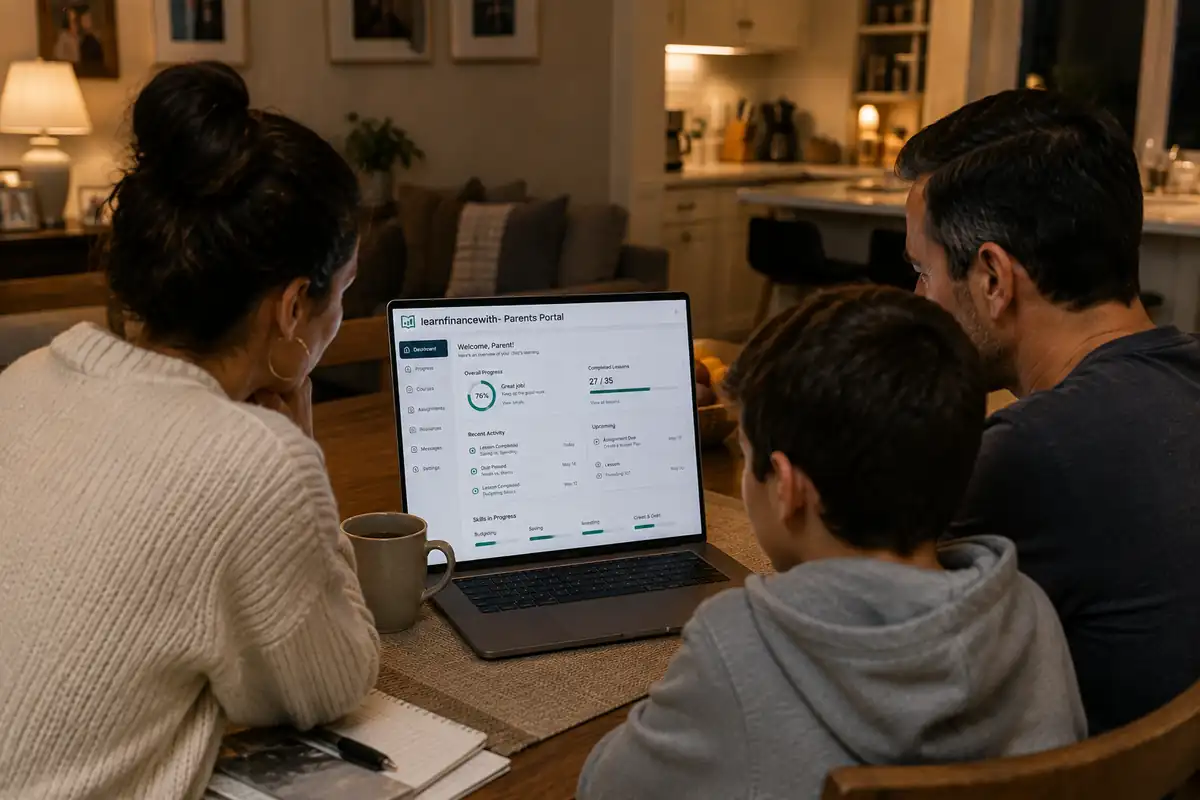
For families
For families
What your child is learning, what you can see, and what we will never do with their information.

What you can see
A read-only view of what your child is getting good at, in the same five words their teacher and they see — so a parent-teacher conference is three people using one vocabulary rather than three descriptions of the same student.
You will not see a simulated account balance. That is deliberate: a screenshot of a balance is the thing most likely to be mistaken for a real account, and a parent who can see the number tends to ask about the number instead of about the reasoning.
The portal is available in English and Spanish. Both are written, not machine-translated, and a missing translation fails the build rather than showing an English string on a Spanish page.
One thing to talk about tonight
The most useful thing this page can produce is a two-minute conversation at a kitchen table. So it ends with a single question, chosen from whatever your child is actually working on, that you can ask without preparing and without knowing anything about personal finance yourself.
When your child is ready for a real account
The platform watches the simulation for the point at which a student has demonstrated they can handle the real thing — held a budget for a semester, paid what came due, kept money set aside, read a pay stub without help.
When that happens, it tells you. Not a bank. No institution is named, none has paid to appear, and there are no referral fees. What you get is a letter saying it may be a good month to open an account together, and a list of the questions worth asking whoever you choose.